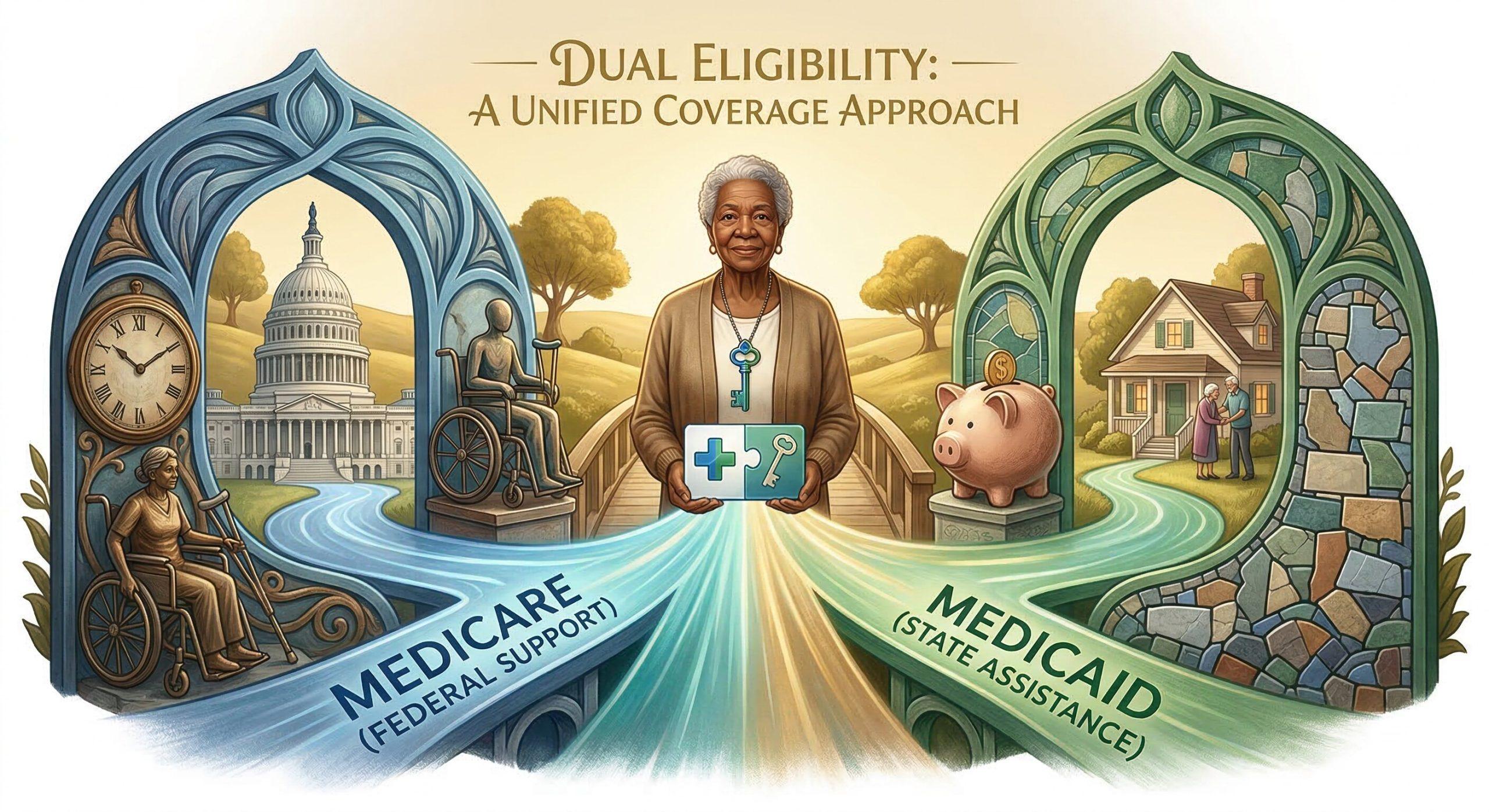
Most people think of Medicare and Medicaid as separate programs serving different groups. Medicare is for older adults and people with certain disabilities. Medicaid is for people with low incomes. What is less understood is that a significant number of Americans qualify for both simultaneously, and that dual eligibility creates a coverage situation unlike anything else in the American healthcare system.
If you or a family member qualifies for both programs, understanding how they work together is not optional. It directly determines what you pay, which providers you can see, and how your care is coordinated.
Who Qualifies for Both Medicare and Medicaid
Dual eligibility generally occurs when someone who qualifies for Medicare also meets their state's income and asset requirements for Medicaid. This most commonly affects people who are 65 and older with low incomes, people under 65 who receive Medicare based on disability and also have limited financial resources, and people who receive Supplemental Security Income.
The eligibility thresholds for Medicaid vary by state, which means someone might be dually eligible in one state and not in another. States have some flexibility in setting income and asset limits, and some have expanded eligibility significantly. If you are on Medicare and your income is limited, checking Medicaid eligibility in your state is worth doing even if you have been told you do not qualify before, because thresholds change and state expansions can open eligibility to new groups.
The differences between what Medicare and Medicaid cover, and how those programs interact when someone is enrolled in both, are worth understanding before you assume your dual coverage automatically handles everything. Our guide on the differences between Medicare and Medicaid explains the foundational distinction between these two programs clearly.
How the Two Programs Work Together
When you have both Medicare and Medicaid, Medicare is the primary payer. It pays first on claims for services covered by Medicare, and Medicaid pays second, covering some or all of the remaining costs. For dually eligible beneficiaries, Medicaid often eliminates the cost-sharing that Medicare leaves behind, including deductibles, copays, and the 20 percent coinsurance for outpatient services under Part B.
This layered coverage means that dually eligible individuals often pay very little or nothing out of pocket for Medicare-covered services. The state's Medicaid program picks up what Medicare does not cover, turning what would be significant out-of-pocket exposure for a typical Medicare beneficiary into near-zero costs.
Medicaid also covers services that Medicare does not, including long-term care services, personal care assistance, and some home and community-based services. For dually eligible individuals who need help with daily activities or are at risk of nursing home placement, Medicaid's long-term services and supports are often the most critical benefit in their overall coverage picture.
Choosing the Right Coverage Structure
Dually eligible individuals have specific plan options designed for their situation. Dual Special Needs Plans, commonly called D-SNPs, are Medicare Advantage plans specifically designed for people with both Medicare and Medicaid. These plans coordinate benefits from both programs, often providing additional services, care coordination, and benefits like transportation, meals, and dental care beyond what either program offers separately.
Enrollment in a D-SNP requires that you are enrolled in both Medicare and Medicaid. These plans can be joined during special enrollment periods available to dually eligible individuals, which is more flexible than standard Medicare enrollment windows. If you are dually eligible and currently in a standard Medicare Advantage plan or Original Medicare, comparing D-SNP options in your area is worth doing annually.
Care coordination is one of the biggest practical advantages of D-SNP enrollment. Dually eligible individuals often have complex health situations, and navigating two separate programs with different provider networks, different billing systems, and different administrative contacts creates real friction. D-SNPs assign a care coordinator who helps manage the connection between Medicare and Medicaid benefits, which reduces the administrative burden on the beneficiary and often improves health outcomes by ensuring services are not duplicated or missed.
What Dual Eligibility Does Not Automatically Fix
Having both Medicare and Medicaid does not mean all healthcare is free and frictionless. Providers must accept Medicaid in addition to Medicare for the coordinated cost-sharing to work properly. Medicaid provider networks are sometimes narrower than Medicare networks, and if you see a provider who accepts Medicare but does not accept Medicaid, the Medicaid cost-sharing benefit may not apply.
Prescription drug coverage for dually eligible individuals is handled through Medicare Part D rather than Medicaid. Dually eligible individuals are automatically enrolled in Extra Help for Part D, which means very low drug copays. But you still need to be enrolled in a Part D plan or a Medicare Advantage plan with drug coverage for this benefit to apply.
Dual eligibility is genuinely one of the most comprehensive coverage situations available in American healthcare. Understanding what it includes and how to use it effectively is the difference between struggling with healthcare costs and having them largely covered.