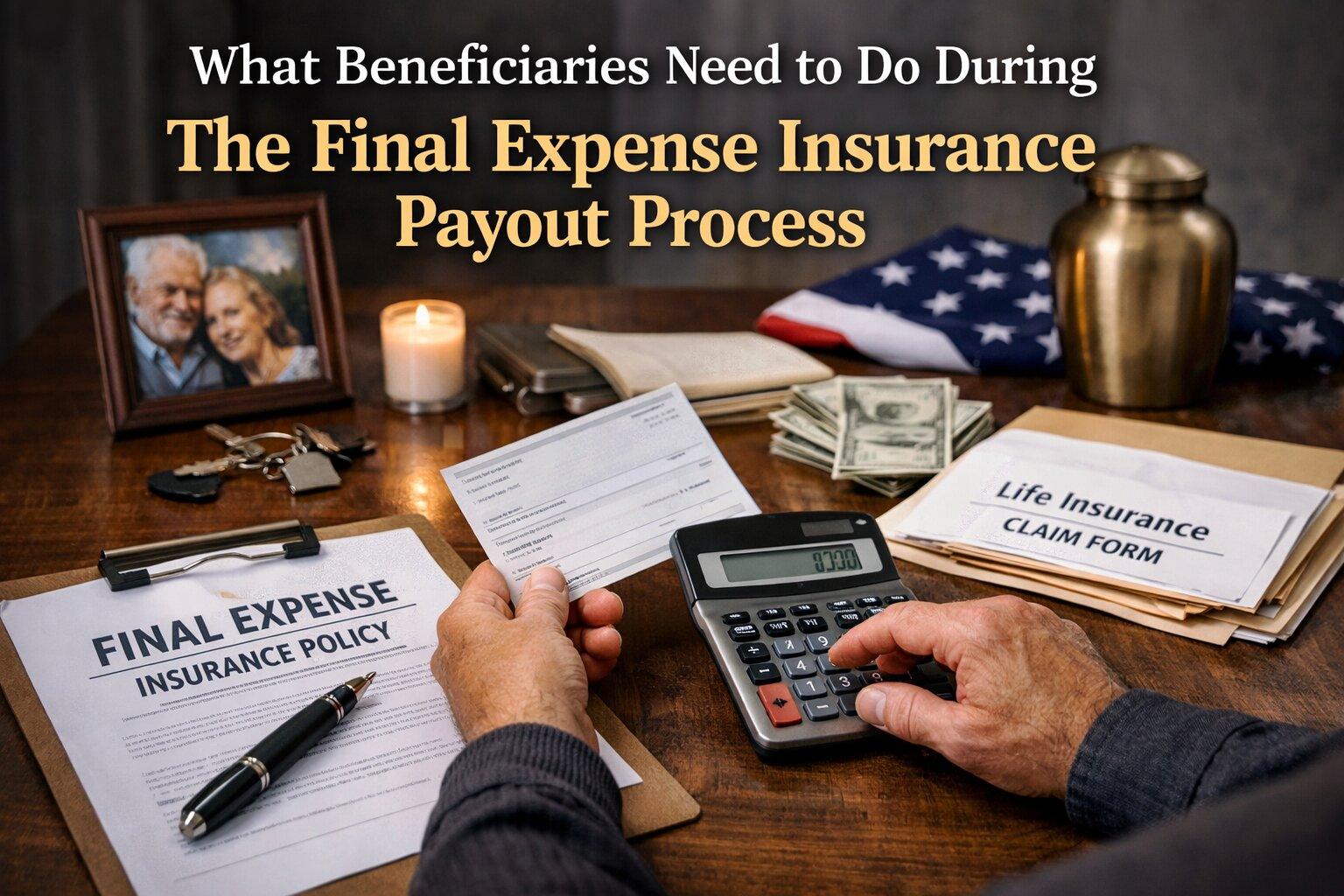
Most people who purchase final expense insurance spend a lot of time thinking about the application, the premium, and the coverage amount. Very few think about what happens on the other end, the moment when a beneficiary actually needs to file a claim and collect the benefit. That gap in preparation creates unnecessary stress for grieving families who are already dealing with one of the hardest experiences of their lives.
The payout process for final expense insurance is straightforward compared to larger life insurance policies, but it still requires specific steps completed in a specific order. Knowing what those steps are before the need arises is one of the most practical things a policyholder can do for the people they leave behind.
What Triggers the Claim and Who Files It
The death benefit on a final expense policy becomes payable when the insured person dies and the beneficiary submits a valid claim to the insurance company. The beneficiary named on the policy is the person responsible for initiating that process. If the policyholder named multiple beneficiaries, each one may need to file separately depending on how the insurer handles split claims.
One common source of confusion is what happens when the named beneficiary has died before the insured. If no contingent beneficiary was named, the death benefit typically passes to the insured's estate. That means it goes through probate, which delays distribution and may reduce the net amount available for funeral costs. This is one of the strongest reasons to name a contingent beneficiary when the policy is purchased and to review that designation periodically. The National Association of Insurance Commissioners recommends reviewing beneficiary designations after major life events including marriages, divorces, and deaths in the family.
If the beneficiary is a minor, the insurer will not pay the benefit directly to the child. A legal guardian or court-appointed trustee must be in place to receive the funds. Families who intend to name a minor as beneficiary should plan this in advance with an attorney rather than discovering the complication after a death occurs.
Documents the Beneficiary Needs to Gather
Before contacting the insurance company, the beneficiary should gather several documents. Having these ready before the first call shortens the process considerably.
The most important document is the certified death certificate. Insurers require an original certified copy, not a photocopy. Families should request multiple certified copies from the funeral home or the county vital records office at the time of death because several institutions, including banks, courts, and government agencies, will each require their own copy. Ordering too few creates delays across every process that follows.
The beneficiary will also need the original policy document or the policy number. If the policyholder stored the document somewhere the family cannot locate, the insurer's customer service team can look up the policy using the insured's name, date of birth, and Social Security number. It is worth knowing your insurer's name and contact information before this situation arises rather than searching for it afterward.
A government-issued photo identification for the beneficiary is required to verify identity. In some cases the insurer will request a completed claim form, which they provide directly. The beneficiary fills it out with basic information about the insured, the date of death, and the manner of death.
How the Claim Is Reviewed and Paid
Once the insurer receives the completed claim form, the certified death certificate, and identity verification, a claims examiner reviews the submission. For final expense policies, this review is typically faster than it is for large life insurance policies because the coverage amounts are smaller and the underwriting at the time of purchase was minimal.
The examiner checks that the policy was active at the time of death, meaning premiums were current and the policy had not lapsed. They verify that the cause of death does not trigger any policy exclusions. Most final expense policies have a graded benefit period during the first two years of coverage. If the insured dies from natural causes within that window, the insurer typically pays a return of premiums plus interest rather than the full face amount. Deaths resulting from accidents are usually covered at the full benefit amount from day one regardless of the graded period.
The Insurance Information Institute notes that most life insurance claims are paid within 30 days of the insurer receiving a complete claim submission. If the insurer requires additional documentation or has questions about the claim, that timeline extends. Beneficiaries have the right to ask for a written explanation of any delay.
Payment is issued in a lump sum in most cases. The beneficiary chooses how to receive it, typically by check or electronic funds transfer. The death benefit paid to a named individual beneficiary is generally not subject to federal income tax, which means the full amount is available for funeral expenses and any remaining costs the policyholder wanted to cover.
What to Do If a Claim Is Delayed or Denied
Delays are more common than outright denials, and most delays resolve once the insurer receives whatever missing document triggered the hold. If your claim is delayed, ask the examiner for a specific list of what is outstanding and a realistic timeline for resolution. Follow up in writing so there is a record of the exchange.
A denial is a more serious situation. The insurer must provide a written explanation of the reason. Common denial reasons include a policy that lapsed due to missed premiums, a death that occurred during the graded benefit period where only the limited benefit applies rather than the full face amount, or a finding of material misrepresentation on the original application.
If you believe a denial is incorrect, you have the right to appeal. Submit your appeal in writing and include any documentation that contradicts the insurer's stated reason. Your state's insurance commissioner office is a resource if the insurer is unresponsive or the denial appears to violate your state's insurance regulations. The National Association of Insurance Commissioners website has a directory that connects you to your state's department.
Understanding how different final expense policies are structured before a claim ever needs to be filed makes a real difference in what the beneficiary experiences. The distinction between graded and level benefit policies, for example, directly affects what gets paid and when. Families who have taken the time to understand graded benefit vs level benefit final expense policies are far better positioned to know what to expect when the time comes, and far less likely to be caught off guard by a payout that does not match their assumptions.