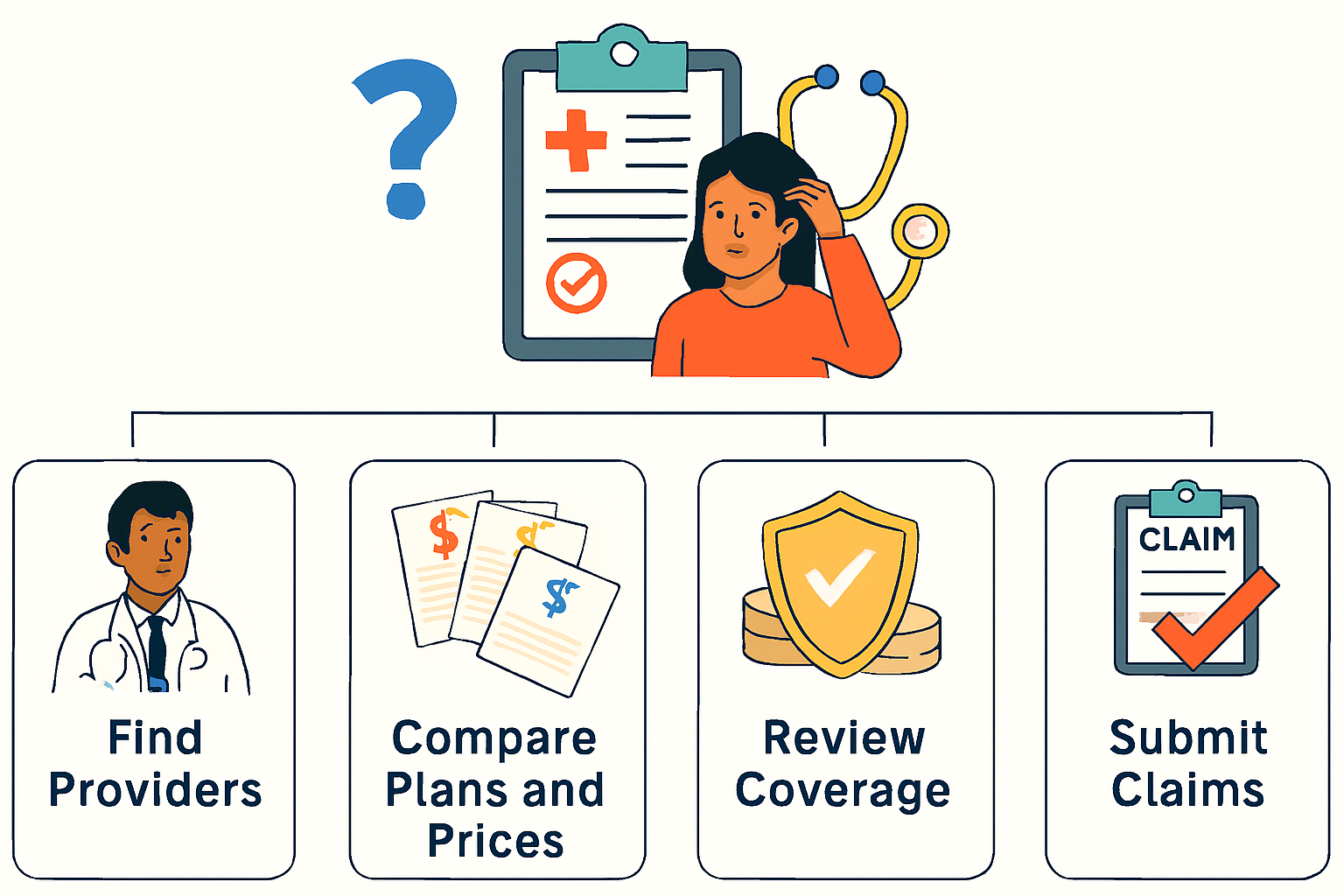
Choosing health insurance is one of the most important financial decisions you’ll make each year. Whether you’re a parent managing care for your children, a freelancer navigating unpredictable income, or someone in between jobs, the right plan can protect your health and your wallet. The wrong one can leave you exposed to surprise bills, denied claims, or coverage gaps when you need help most.
This guide walks you through the process step by step, helping you make informed, confident choices based on your real-life needs, not just the monthly premium.
Step 1: Know Your Health Profile
Start by looking at your current and expected health needs. Ask yourself:
- Do you or your dependents have chronic conditions?
- How often do you visit doctors or specialists?
- Do you take regular prescriptions?
- Are you planning a surgery, pregnancy, or major procedure?
- Do you need mental health or therapy services?
Your answers will shape what kind of plan structure makes sense. For example, a low-premium, high-deductible plan might work for someone who rarely visits the doctor. But for a family with frequent pediatric visits or a freelancer managing anxiety, a higher-premium plan with better coverage might save money in the long run.
Step 2: Understand the Types of Plans
Health insurance plans come in several formats. Each has trade-offs in cost, flexibility, and provider access.
- HMO (Health Maintenance Organization)- Lower cost, but you must stay in-network and get referrals for specialists.
- PPO (Preferred Provider Organization)- More flexibility to see out-of-network providers, but higher premiums and deductibles.
- EPO (Exclusive Provider Organization)- In-network only, but no referrals needed.
- POS (Point of Service)- Hybrid of HMO and PPO, with some out-of-network coverage and referral requirements.
Freelancers often prefer PPOs for flexibility, while families may choose HMOs for predictable costs and coordinated care.
Step 3: Compare Costs Beyond the Premium
The monthly premium is just one part of the cost equation. You also need to consider:
- Deductible- What you pay before insurance starts covering services
- Copays- Fixed fees for doctor visits, prescriptions, or urgent care
- Coinsurance- The percentage you pay for services after meeting your deductible
- Out-of-pocket maximum- The most you’ll pay in a year before insurance covers 100 percent
This is where understanding deductibles copays coinsurance becomes essential. A plan with a low premium but a high deductible might cost you more if you need regular care. On the other hand, a higher premium plan with lower out-of-pocket costs might be more affordable over the year.
Step 4: Check the Provider Network
Always verify whether your preferred doctors, specialists, and hospitals are in-network. Out-of-network care can be significantly more expensive or not covered at all. For families, this means checking pediatricians and OB-GYNs. For freelancers, it might mean ensuring access to mental health providers or urgent care near your workspace.
If you travel often or live in a rural area, a broader network like a PPO may be worth the extra cost.
Step 5: Review Prescription Coverage
Not all plans cover medications the same way. Check:
- Whether your prescriptions are on the plan’s formulary (approved drug list)
- What tier your medications fall under (generic, brand-name, specialty)
- Copay or coinsurance amounts for each tier
If you or a family member takes regular medication, this can be a major cost factor. Some plans offer mail-order discounts or preferred pharmacy networks that reduce your expenses.
Step 6: Consider Subsidies and Tax Credits
If you’re buying insurance through the ACA marketplace, you may qualify for subsidies based on your income and household size. Freelancers and gig workers often benefit from these credits, which can significantly reduce monthly premiums.
Families with children may also qualify for CHIP (Children’s Health Insurance Program) or Medicaid, depending on income and state rules.
Use the official marketplace calculator to estimate your eligibility before choosing a plan.
Step 7: Evaluate Plan Extras and Wellness Benefits
Some plans offer added value through:
- Free annual checkups and screenings
- Telehealth access
- Mental health support
- Gym membership discounts
- Health coaching or wellness rewards
These extras can improve your quality of care and reduce long-term costs. For freelancers, telehealth and mental health access can be especially valuable when working remotely or managing solo stress.
Step 8: Time Your Enrollment Right
Open enrollment typically runs from November to mid-January, depending on your state. If you miss this window, you may need to wait unless you qualify for a Special Enrollment Period due to:
- Job loss
- Marriage or divorce
- Birth or adoption
- Moving to a new ZIP code
- Losing other coverage
Mark your calendar and act early. Waiting too long can leave you uninsured or stuck with a plan that doesn’t fit.
Choosing health insurance is not just a financial decision. It is a behavioral one. It reflects how you use care, how you manage risk, and how you plan for the unexpected. Whether you are a parent juggling family needs or a freelancer building your own safety net, the right plan gives you more than coverage. It gives you peace of mind.
Take the time to assess your needs, compare your options, and read the fine print. The best plan is not always the cheapest. It is the one that fits your life.