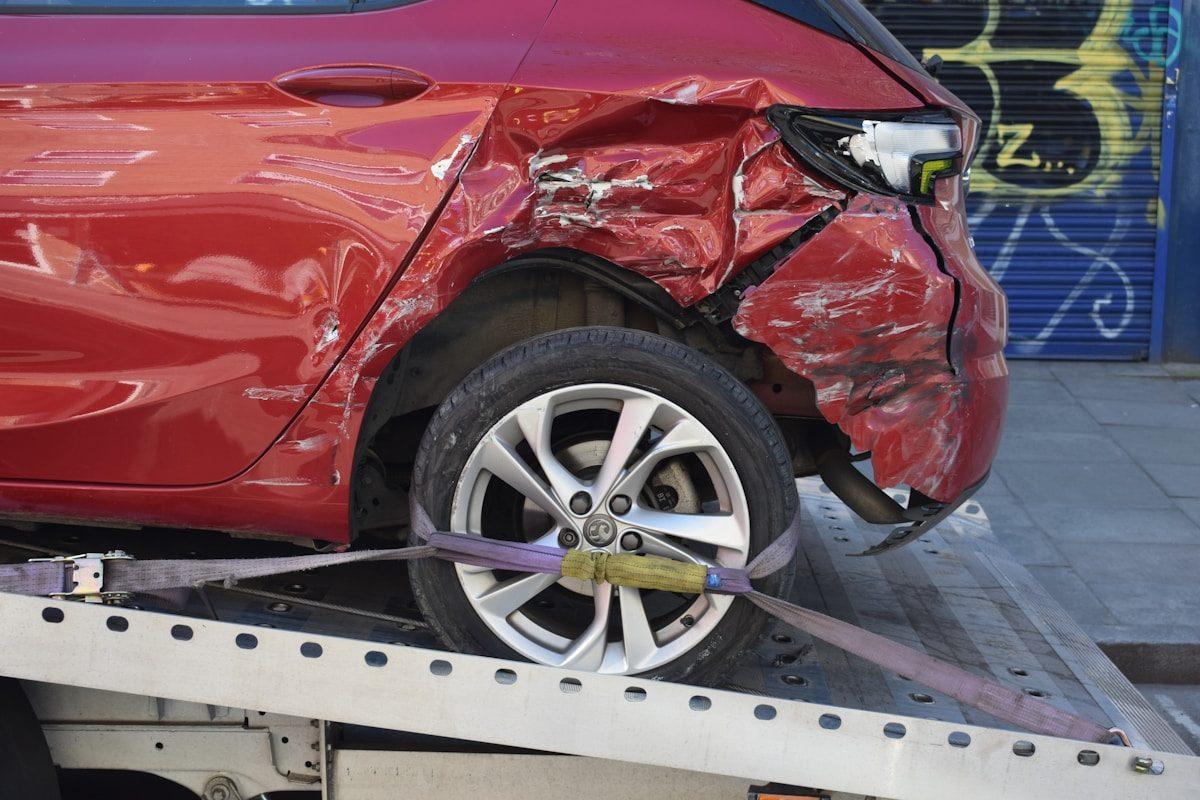
One in eight drivers on the road today has no auto insurance. In some states, that number is closer to one in four. If one of those drivers hits you, your ability to recover your losses depends heavily on whether you have uninsured motorist coverage on your own policy. Most drivers assume the other person's insurance pays when they are not at fault. That assumption is dangerous and often wrong when the at-fault driver has no coverage at all.
The liability system that underpins auto insurance in the United States assumes that every driver carries coverage. When that assumption breaks down, which happens millions of times a year, the financial consequences fall on whoever is left holding the bill. Without the right coverage on your own policy, that person is you. Understanding what uninsured motorist coverage does and how it works is one of the most important things you can do before an accident happens.
What Uninsured and Underinsured Motorist Coverage Actually Do
Uninsured motorist coverage, commonly called UM, steps in when the driver who caused your accident has no liability insurance. It pays for your medical bills, lost wages, and in some cases your pain and suffering, up to the limits you selected when you bought your policy. Without it, your only real option after an accident with an uninsured driver is to sue them personally. Most uninsured drivers do not have significant assets to collect, which means a court judgment in your favor is often worth very little in practice.
Underinsured motorist coverage, called UIM, applies when the at-fault driver has insurance but their limits are too low to cover your actual losses. A driver carrying the state minimum liability limits might have $25,000 in bodily injury coverage. If your medical bills and lost wages total $80,000, their policy pays its limit and stops. Your UIM coverage picks up where theirs leaves off, up to your own limits. The two coverages are often sold together and work as a safety net beneath the liability system that is supposed to protect you.
Your health insurance may cover some medical costs after an accident with an uninsured driver, but it typically does not pay for lost wages or pain and suffering. Collision coverage on your own policy pays for vehicle damage regardless of fault, but it does not touch your medical expenses or other losses. Neither your health insurance nor your collision coverage fills the same role as UM and UIM. They are genuinely different protections that address different parts of your potential loss.
The Coverage Details Drivers Overlook
When you select UM coverage, you choose a per-person limit and a per-accident limit. A policy showing 100/300 means it pays up to $100,000 per injured person and up to $300,000 total per accident. Your UM limits should ideally match your liability limits. Carrying high liability limits while carrying low UM limits creates a situation where you are better protected for the damage you cause others than for the damage others cause you. That is a common imbalance that is worth correcting.
Some states allow a feature called stacked UM coverage. Stacking lets you multiply your UM limits across multiple vehicles on your policy. A household with two cars and a $100,000 per-person UM limit has $200,000 of protection per person in states that allow stacking. Non-stacked coverage applies only the limit attached to the single vehicle involved in the accident. Stacked coverage costs more per vehicle but provides meaningfully stronger protection in a serious accident involving significant injuries.
UM coverage generally applies to hit and run accidents in most states. A driver who flees the scene is treated as an uninsured driver for the purposes of your claim. The specific rules vary by state and insurer, but your UM coverage is usually the first place to look after a hit and run. Some policies require physical contact between vehicles to trigger UM coverage in that situation. Others accept credible witness statements as sufficient. Knowing your policy's specific language before an accident happens gives you a clearer picture of what to expect and what documentation to gather at the scene.
The coverage gap created by an uninsured driver can be significant. A serious accident involving surgery, physical therapy, and several weeks out of work has the potential to produce losses well into the tens of thousands of dollars. Without UM coverage, the injured driver absorbs those costs directly. With it, the financial recovery happens through their own insurer rather than through the impossible task of collecting from a driver with no assets and no policy.
Why Carrying This Coverage Makes Financial Sense
Uninsured motorist coverage is one of the more affordable components of an auto insurance policy. For most drivers, adding UM and UIM coverage at reasonable limits adds a relatively modest amount to the monthly premium compared to the protection it provides. The states with the highest rates of uninsured drivers tend to have the lowest average incomes and the weakest enforcement of mandatory insurance laws. If you live in one of those states, the math for carrying UM coverage is even stronger.
The calculation is straightforward. The premium you pay for UM coverage is small and predictable. The loss you absorb without it after a serious accident with an uninsured driver is potentially enormous and completely unpredictable. Insurance works precisely because individual losses are unpredictable even when their likelihood is measurable. UM coverage is one of the cleaner applications of that principle in personal auto insurance.
Carry uninsured motorist coverage at limits that match your liability coverage. Add UIM if your insurer offers it separately. In states that allow stacking, the additional cost is worth reviewing, especially for households with multiple vehicles. Ask your insurer whether your state allows stacking and whether your current policy uses it. You cannot control whether the driver who hits you has insurance. You have full control over whether your own policy protects you when they do not.