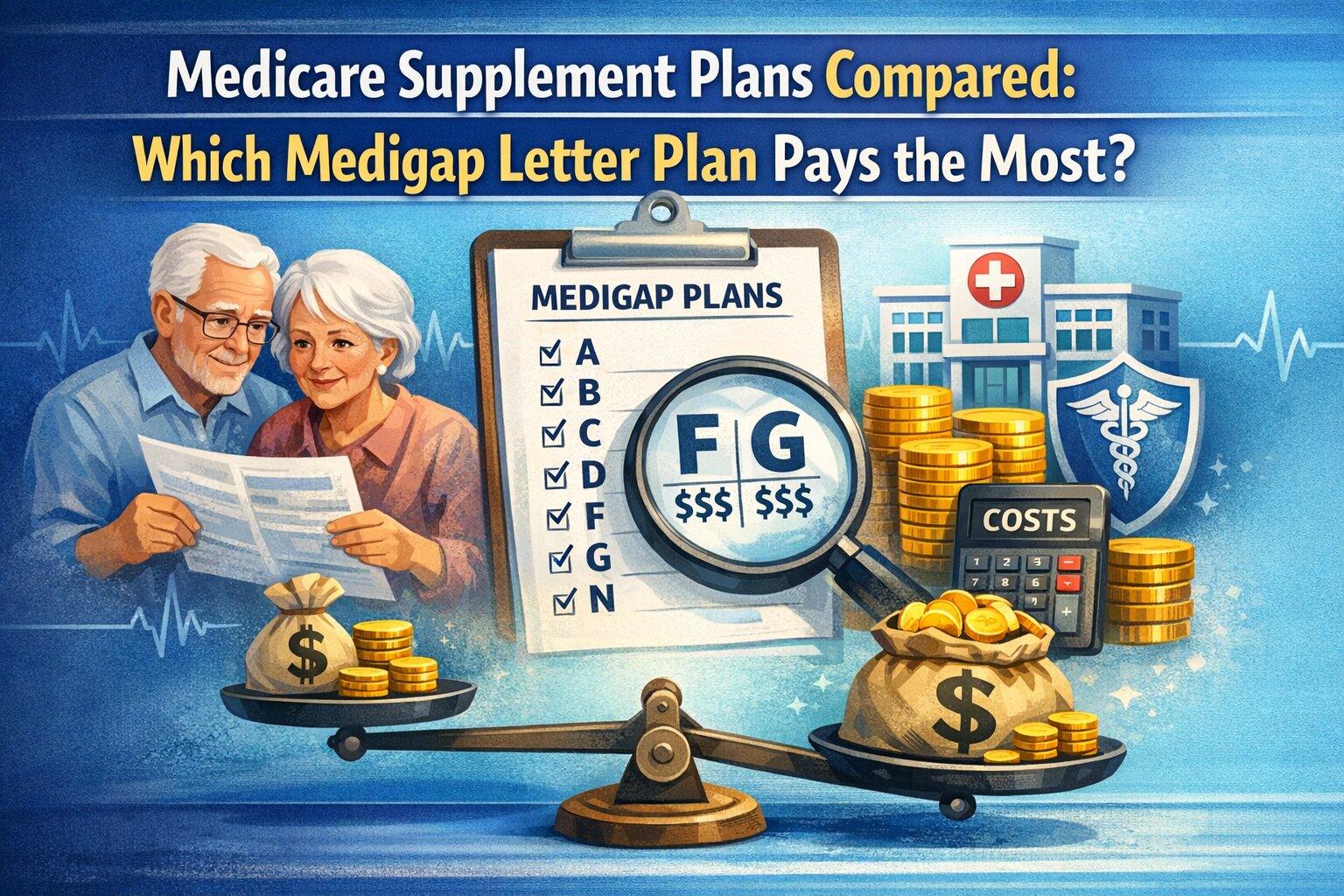
Medicare covers a lot, but it does not cover everything. The gaps in Original Medicare, including deductibles, copays, coinsurance, and the absence of an out-of-pocket maximum, can add up to significant costs for people who use medical services regularly. Medicare Supplement insurance, commonly called Medigap, is designed to fill those gaps. But with multiple standardized plans identified by letter and offered by dozens of insurance companies, the comparison process is genuinely confusing for most Medicare beneficiaries.
The good news is that Medigap plans with the same letter designation offer identical benefits regardless of which insurance company sells them. Plan G from one carrier covers exactly the same costs as Plan G from another. The variable is the premium. That standardization simplifies the comparison considerably once you understand what each plan covers. The meaningful choice is which letter plan fits your health use pattern and your budget, not which company offers the most benefits.
How Medigap Works and What the Letter Plans Actually Cover
Medigap policies are sold by private insurance companies and work alongside Original Medicare, specifically Medicare Part A and Part B. They do not work with Medicare Advantage plans, which are a separate program entirely. When you have Original Medicare and a Medigap policy, Medicare pays its share of approved costs first, and your Medigap policy pays its portion of the remaining costs based on the specific plan you selected.
The federally standardized Medigap plans available to most beneficiaries are identified by letters: A, B, D, G, K, L, M, and N. Plans C and F, which covered the Part B deductible, are no longer available to people who became eligible for Medicare after January 1, 2020. If you were eligible before that date, you may still be able to purchase those plans, but most new enrollees are choosing from the current lineup.
Plan A is the most basic, covering only hospital coinsurance and the first three pints of blood. Plan G is the most comprehensive plan currently available to new Medicare enrollees. It covers the Part A deductible, Part A coinsurance, Part B coinsurance, skilled nursing facility coinsurance, foreign travel emergency costs up to a limit, and the Part B excess charges that some providers bill above the Medicare-approved amount. The only cost it does not cover is the Part B annual deductible, which is $240 in 2024.
Plan N covers most of the same items as Plan G but with some cost-sharing. With Plan N, you pay up to $20 for some office visits and up to $50 for emergency room visits that do not result in an inpatient admission. Plan N does not cover Part B excess charges, which means you need to see providers who accept Medicare assignment to avoid being billed above the Medicare-approved amount. Plan N typically carries a lower premium than Plan G in exchange for that cost-sharing.
Comparing the Most Popular Plans: G, N, and High-Deductible G
Plan G is the most commonly chosen Medigap plan among new enrollees for good reason. It provides the most comprehensive coverage available to people who became Medicare-eligible after 2020, leaving you responsible only for the annual Part B deductible each year. After that deductible is met, Plan G covers essentially all Medicare-approved costs for the rest of the year. There is no coinsurance, no copays for covered services, and no exposure to Part B excess charges.
The appeal of Plan G is predictability. Once you have paid the Part B deductible, your out-of-pocket exposure for Medicare-covered services is effectively zero for the rest of the year. For people who use healthcare frequently, who manage chronic conditions, or who simply value the financial certainty of knowing their costs are capped, Plan G delivers that predictability at a premium that is higher than the alternatives but lower than the potential cost exposure of less comprehensive plans.
Plan N is worth serious consideration for people who are generally healthy and use Medicare services infrequently. The premium is typically meaningfully lower than Plan G, and the cost-sharing is limited to the $20 office visit copay and the $50 emergency room copay. For a healthy person who sees a doctor a few times a year and rarely uses the emergency room, the premium savings from choosing Plan N over Plan G often exceed the additional cost-sharing they pay. The break-even calculation between the two plans is worth running with actual local premium quotes.
High-Deductible Plan G is a third option that has grown in popularity. It works exactly like Plan G but with an annual deductible, currently $2,800, that you must meet before the plan begins paying. The monthly premium is substantially lower than standard Plan G. For people who are healthy, rarely use significant medical services, and want protection against catastrophic costs while minimizing monthly premium outlay, High-Deductible Plan G offers an attractive structure. The trade-off is that you carry meaningful out-of-pocket exposure up to the deductible amount each year.
Choosing the Right Plan for Your Health and Budget
The choice between Medigap plans ultimately comes down to your health, your use of medical services, and your financial priorities. Someone with multiple chronic conditions who sees specialists regularly, takes expensive medications through Medicare Part D, and values predictable costs will generally find Plan G worth the higher premium. The certainty of near-zero out-of-pocket costs after the Part B deductible has real value when you are using Medicare extensively.
Someone who is newly eligible for Medicare, is in good health, and uses medical services infrequently should run the premium comparison between Plan G and Plan N specifically. In many markets, the annual premium difference between the two plans is several hundred dollars. Over several years of infrequent healthcare use, the premium savings from Plan N may significantly exceed the additional cost-sharing. The calculus changes if your health status changes, but the Medigap guaranteed issue rights during initial enrollment allow you to start with the plan that fits your current situation.
Enrollment timing matters significantly for Medigap. The guaranteed open enrollment period is the six-month window that begins when you are 65 and enrolled in Part B. During this window, you have the right to purchase any Medigap plan sold in your state without medical underwriting. Outside of this window, most states allow insurers to use medical underwriting to deny coverage or charge higher premiums based on health status. Enrolling during the guaranteed open enrollment period is the most reliable way to access the plan you want at the best available rate.
Because the benefits within each letter designation are identical across all carriers, the premium is the only meaningful differentiator between policies of the same plan type. Get quotes from multiple carriers for the same plan in your zip code and choose the carrier with the lowest premium for your chosen plan. The insurer with the lowest premium for Plan G this year is not necessarily the same carrier with the lowest premium in five years, so reviewing your premium against competitors at renewal is worth the annual exercise.